Why Do We Need Project Management Skills?
- kahansudev
- May 28, 2022
- 2 min read

Updated: Sep 15, 2022
Project management is a life skill
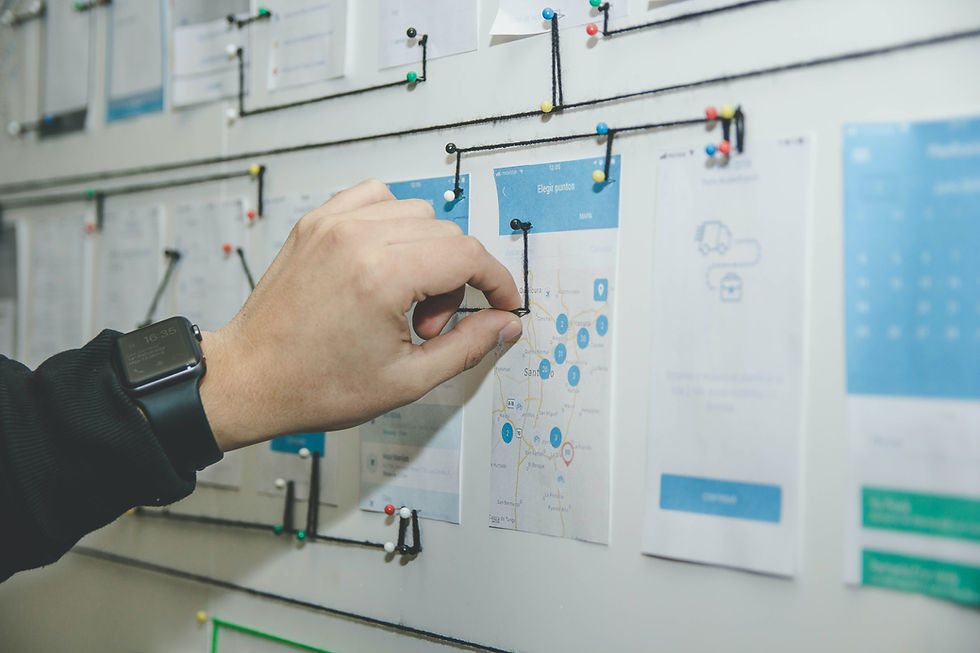
A project is a process that needs to take place to solve a certain problem. The planning and monitoring of this process is project management.
A project manager (PM) does the above by leading a team to fulfill the requirements of a project. Now let us take a quick look at what goes into this skill.
Project Constraints
A project is gauged using three major constraints

These three factors form the foundation of the project and are famously known as the Project Management Triangle. These factors are further elaborated by answering the following questions;
• What is the problem at hand?
• Who are the stakeholders involved?
• How much does the project cost?
• How much time will the project take?
• What are the risks involved?
• What are the different tasks involved?
• What are the resources required to carry out the tasks?
• Who would suit best to carry out these tasks?
Project Life Cycle
Thus, defining the project in these terms brings us to the first stage in a project’s life cycle. The journey of a project from start to completion is the project life cycle and the following are the stages that make up a life cycle.
1. Initiation Stage
The project is understood and a vision for the project is documented. The documentation takes into consideration additional factors such as assumptions, dependencies and constraints, quality plans and communication plans.
2. Planning Stage
The recruited team is allocated the tasks and the communication lines between team members and the governing bodies are opened. This then calls for an iteration of the initial plans where over-optimistic timelines are debated and corrected to suit reality, feasibilities of the tasks are re-evaluated, costs are re-estimated and the vision of the scope is given a structure.
3. Execution Stage
Most of the work is done in this stage where the team members are given their time and space to execute the tasks set out for them as per the plan.
4. Monitoring and Control
This stage in the project’s life cycle almost always runs parallel to the execution. Cost, time, the team’s tasks and performance are monitored and thus the quality of the deliverables is controlled.
5. Project Closure
The project is documented and delivered on completion. This stage is time for retrospection where the plan and team are evaluated, identifying all the factors that worked well, the failures and spaces that have room for improvement.
Conclusion
The Project Manager (PM) is accountable for every stage of the Project Life Cycle and bears the responsibility of making crucial decisions.
It does not take too much brainpower to correlate the transferable skillset that would aid in bettering our lives.
According to a 2017 talent gap analysis carried out by Anderson Economic Group (AEG), commissioned by Project Management Institute (PMI), by the year 2027 the demand for a project management-oriented labor force is expected to grow by 33%, needing nearly 88 million individuals to fill in these roles.
With a high demand in the industry, it serves for one to educate themselves in this field and improve their chances of employment. The skills and techniques the knowledge in this field provide are not only beneficial to one’s career but could also be transferred to improve the quality of one’s personal life.
Until next blog
Kahan J Sudev


Comments